
The annulus between the inner and outer vessels of a cryogenic tank plays an important role in thermal performance. Its width determines the available insulation thickness, influences heat ingress, and affects how effectively installers can fill and distribute materials such as expanded perlite. Choosing the right annulus width therefore requires a balance between thermal efficiency, tank geometry, installation quality, and cost.
The Role of the Annulus in Cryogenic Tanks
Double-wall cryogenic tanks use the annular space between the inner vessel and outer shell as the main insulation zone. Depending on the tank design, this space can contain expanded perlite, multilayer insulation, or other cryogenic insulation materials.
The annulus limits heat transfer from the environment to the stored cryogenic liquid. Its dimensions therefore directly influence the overall insulation design and thermal performance of the tank.
Insulation Thickness and Heat Transfer
Increasing the annulus width allows designers to install a thicker insulation layer. In general, additional insulation reduces heat ingress and helps control boil-off gas generation.
However, increasing insulation thickness does not produce unlimited benefits. Beyond a certain point, the reduction in heat transfer becomes relatively small compared with the additional material, tank dimensions, and construction cost.
Engineers must therefore define an annulus width that achieves the required thermal performance without unnecessarily increasing the size of the tank.
Annulus Width and Perlite Filling
For expanded perlite insulation, annulus geometry also affects installation quality. The material must flow through the available space and distribute uniformly around the inner vessel.
A very narrow annulus can make filling more difficult, particularly around structural elements, supports, and other internal obstructions. Poor distribution can create areas with insufficient insulation or variations in bulk density, reducing overall thermal performance.
A suitable annulus width helps installers achieve consistent perlite distribution while maintaining the required insulation density.
Tank Geometry and Available Space
Annulus width also affects the external dimensions of a cryogenic tank. Increasing the insulation space increases the overall tank diameter, which can influence structural design, transportation, plot space, and project cost.
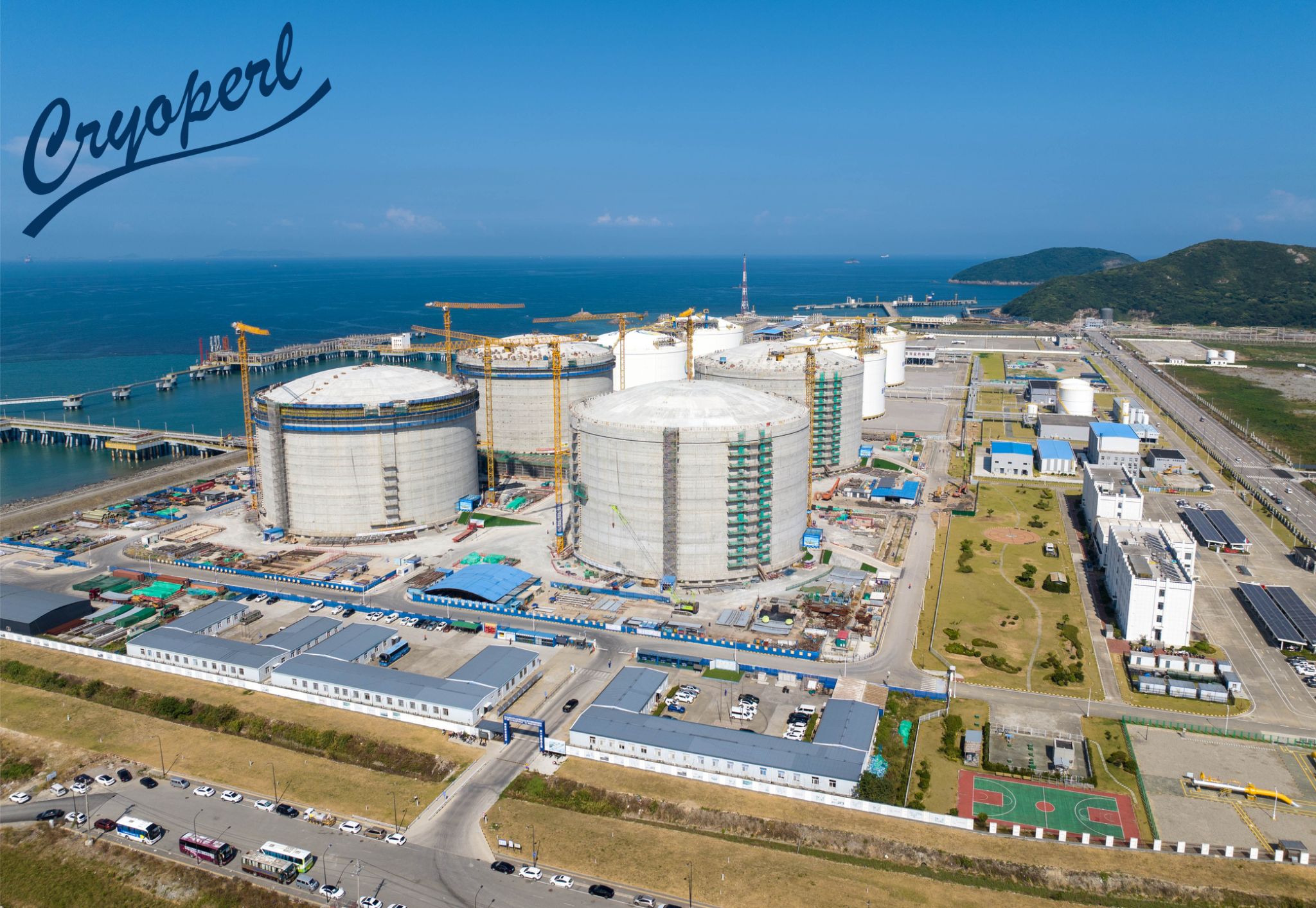
This becomes particularly important for large LNG tanks and other high-capacity cryogenic storage systems, where relatively small changes in diameter can represent significant additional material and construction requirements.
Designers must consider these practical constraints alongside thermal calculations.
Finding the Optimum Annulus Width
There is no universal annulus width that works for every cryogenic tank. Engineers must consider the stored product, operating temperature, tank size, insulation technology, heat leak requirements, and installation method.
For perlite-insulated tanks, designers should also consider filling access, internal obstructions, expected bulk density, and the ability to achieve uniform insulation throughout the annular space.
The optimum design balances thermal performance with practical installation and economic constraints.
Conclusion
Cryogenic tank annulus width is more than a geometric detail. It influences insulation thickness, heat ingress, perlite distribution, tank dimensions, and ultimately the long-term performance of the storage system.
A wider annulus does not automatically create a better cryogenic tank. The best design provides enough space to achieve the required thermal performance while allowing reliable insulation installation and avoiding unnecessary construction costs.

