
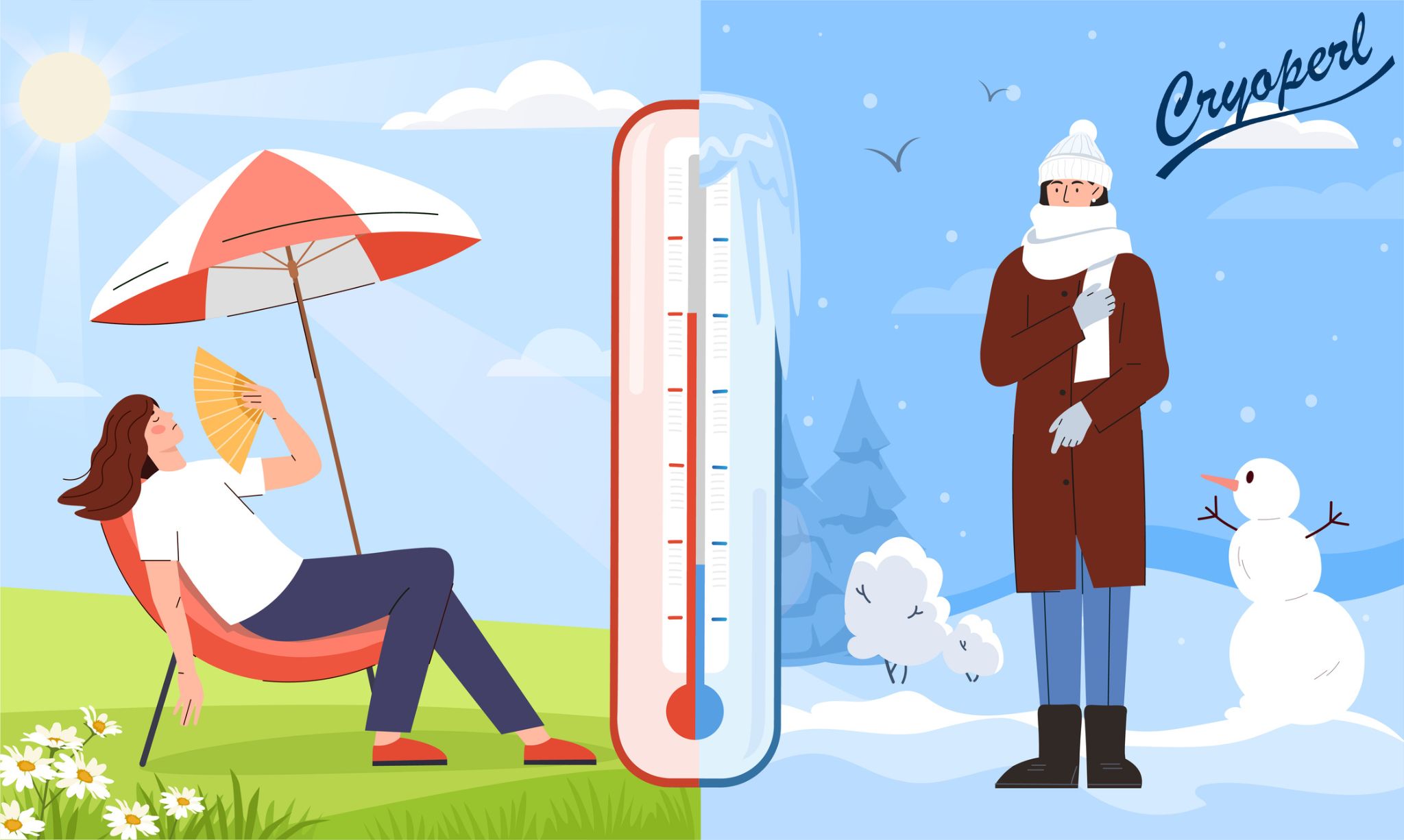
Cryogenic tanks store products at extremely low temperatures regardless of the surrounding environment. However, the local climate has a major influence on tank design, insulation performance, operating conditions, and long-term reliability. A tank installed in a tropical LNG terminal faces very different challenges from one operating in the Arctic, even if both store the same cryogenic liquid.
The Influence of Ambient Temperature
The temperature difference between the cryogenic liquid and the surrounding environment drives heat transfer into the tank. In tropical regions, ambient temperatures can exceed 40°C, increasing the thermal load on the insulation system. In Arctic environments, the outside temperature may fall below -40°C, significantly reducing heat ingress.
Although colder climates naturally reduce boil-off, they introduce other engineering challenges that designers must carefully consider.
Designing for Tropical Conditions
High ambient temperatures increase the amount of heat entering the tank. As a result, insulation systems must minimise heat transfer while maintaining acceptable boil-off rates.
Solar radiation also becomes an important factor. Continuous exposure to sunlight heats the outer shell and increases the thermal load, particularly on above-ground storage tanks. Designers often select reflective coatings or light-coloured paint to reduce solar absorption.
Equipment installed around the tank, including valves, instrumentation, and piping, must also withstand high temperatures while maintaining reliable operation.
Designing for Arctic Conditions
Arctic installations benefit from lower heat ingress, but they face a completely different set of challenges. Steel structures, foundations, and auxiliary equipment must remain reliable at extremely low ambient temperatures.
Materials become less ductile as temperatures decrease, making material selection critical. External piping, supports, and valves must also resist snow, ice accumulation, and repeated freeze-thaw cycles.
Cold climates can also affect instrumentation, electrical systems, and maintenance activities, requiring equipment specifically designed for Arctic service.
Insulation Requirements
Both environments require highly efficient insulation, but for different reasons.
In tropical climates, insulation limits heat ingress and reduces boil-off losses. In Arctic regions, it helps maintain stable operating conditions and prevents excessive cooling of external components that could affect equipment performance.
Vacuum-insulated systems and high-performance insulating materials remain essential in both cases, although the expected heat loads differ significantly.
Operational Considerations
Climate influences more than the tank itself. Filling operations, pressure control, boil-off gas management, and maintenance procedures all depend on local environmental conditions.
In tropical regions, higher boil-off rates may require larger BOG recovery systems or increased refrigeration capacity. Arctic facilities generally experience lower boil-off but must address challenges such as ice formation, limited accessibility, and harsh weather conditions.
Designing for the local climate improves both operational efficiency and long-term reliability.
Conclusion
Cryogenic tanks operate at the same internal temperature whether they are installed in the desert or above the Arctic Circle, but the surrounding environment changes almost every aspect of their design.
Tropical installations focus on reducing heat ingress and managing higher boil-off rates, while Arctic facilities prioritise material performance, weather resistance, and reliable operation in extreme cold. Successful cryogenic tank design always considers the local climate alongside process requirements, ensuring safe, efficient, and reliable operation throughout the life of the installation.

